Salamanca in a Day
Spain’s great university city glows in golden sandstone ninety-five minutes from Madrid — a Plaza Mayor with no rival, a facade with a hidden frog, and a cathedral door with an astronaut nobody expects.
The short version
- Alvia trains run Chamartín to Salamanca in about 95 minutes several times daily, with slower regional services filling the gaps — book the fast ones at renfe.com.
- The Plaza Mayor — 18th-century, harmonious, and golden — holds the standing title of Spain’s most beautiful square, best certified twice: with morning coffee and again floodlit if your train allows.
- The university, founded 1218 and Spain’s oldest, hides a small frog on a skull among its Plateresque facade’s riot — finding it grants luck by tradition and a crowd of squinting company by guarantee.
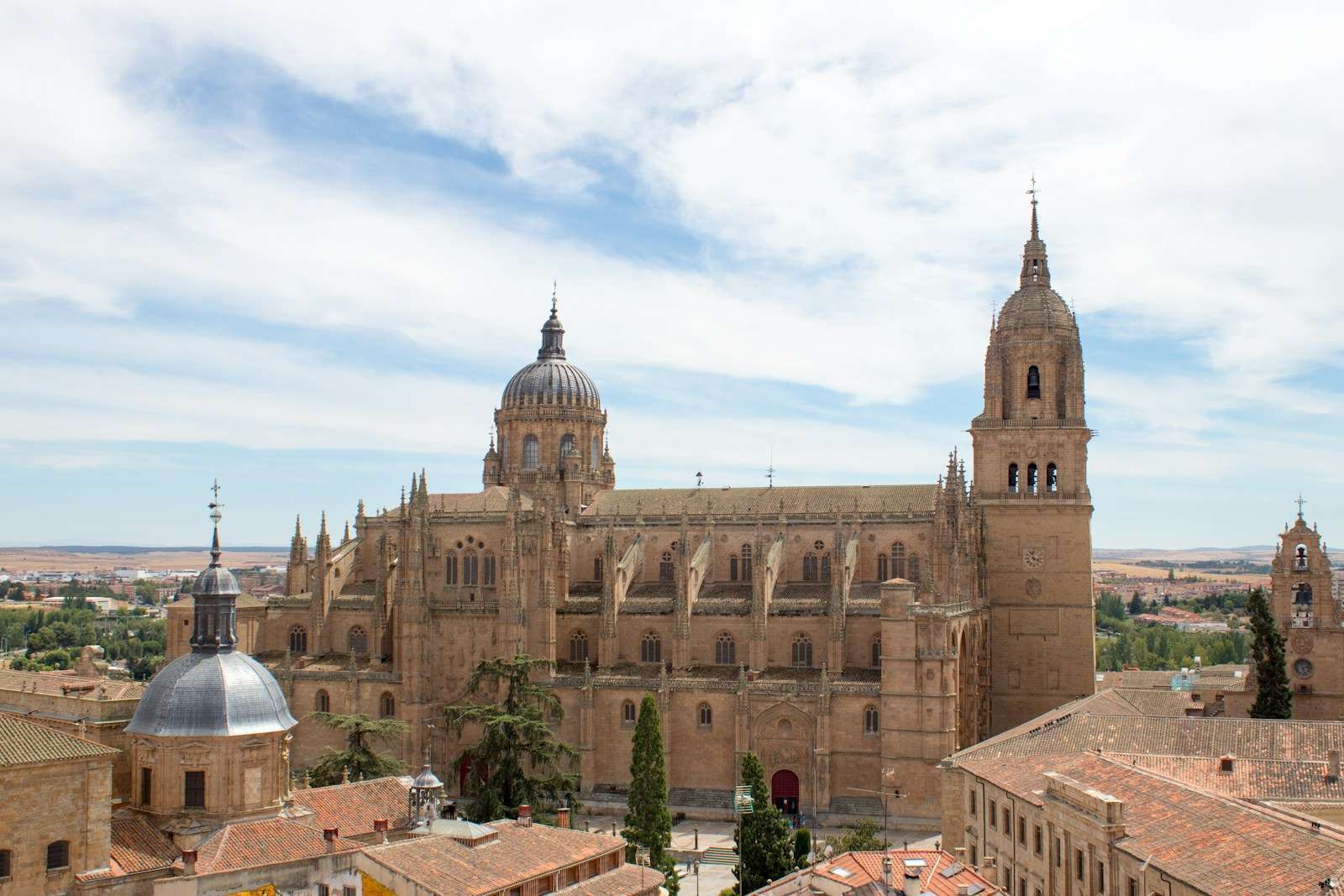
- The cathedral is two joined cathedrals — Gothic Old, plateresque-to-baroque New — and its Ramos door carries the famous astronaut, carved in by restorers in 1992 continuing the tradition of dating a facade with its own era.
- The Ieronimus tower route climbs the cathedral’s terraces and galleries for the rooftop view of the whole golden city — the modest ticket is the town’s best spent money.
- The Casa de las Conchas’ 300 scallop shells, the Roman bridge, and hornazo with a glass of local wine round out a day the sandstone lights from within — ‘La Dorada’ is a description, not a slogan.

Getting there
Chamartín’s Alvia services make the run direct and painless; buy the return leg with the outbound, per the alarm, because Sunday evenings concentrate every weekender in Castile onto the same trains. The station sits a flat fifteen-minute walk or short bus from the old town’s edge. Drivers face two and a half hours of motorway and the old town’s car-hostility; the train wins without argument. Day-trip math is generous — even the 9am departure lands you in the Plaza Mayor before noon coffee cools.
The day
Start in the Plaza Mayor and let it set the register, then work the golden circuit: the Casa de las Conchas facade, the university’s frog-hunt (the crowd around the facade marks the spot — look low on the right-hand skull), and the two cathedrals taken as one building with two personalities. The Ieronimus climb is the midday move — terraces over the domes, storks on the pinnacles, the Tormes below. Lunch runs long and Castilian: hornazo, jamón, roast everything. The afternoon takes the Roman bridge’s river angle, the Art Nouveau Casa Lis museum for the change of century, and the Clerecía towers if your legs still vote. The floodlit plaza before the evening train is the encore the schedule should protect.
When to go
April to June and September to October give walking weather to a city built for it; July–August runs meseta-hot, arguing for the cathedral’s stone-cooled interiors at midday. The university calendar keeps the town young year-round — term time hums, August empties it to visitors. Winter is cold, clear, and golden at a lower sun angle photographers prefer. Sunday evening’s train crunch, per the alarm, is the one calendar fact that bites the unprepared.
Frequently Asked Questions
What’s the story with the astronaut?
The 1992 restoration of the New Cathedral’s Ramos door added modern figures — the astronaut most famously — following the old craft tradition of stamping a facade with its own century. It’s not a mystery, a hoax, or ancient aliens; it’s stonemasons with a sense of humor and a paper trail.
Will I actually find the frog?
With patience or a pointing stranger, yes — it sits on a skull on the facade’s right side. Students historically needed the find for exam luck; visitors need it for the photo. Either way, the facade repays the staring.
Is Salamanca worth it against Toledo or Segovia?
It’s the university city of the three — younger in spirit, most beautiful square, best single facade. Toledo carries more layered history, Segovia the aqueduct drama. All three are documented on this network; Salamanca is the one people underestimate.
Can I combine it with Ávila?
The rail line passes Ávila and its walls, making a two-stop day technically real and practically rushed. Ávila’s walls want ninety minutes; Salamanca wants your whole day. Choose, or give Ávila the return-trip stop with the last hours.
Where do I eat?
Around the plaza for the view at plaza prices, or two streets back for the same kitchen honesty cheaper — Calle Van Dyck is the locals’ tapas answer, a walk north. Hornazo (the meat-stuffed pastry) is the local flag; order it once on principle.