Cervantes’ Alcalá de Henares
Forty minutes on the cercanías to the town that gave Spanish its greatest writer and its first planned university city.
The short version
- Cercanías line C-2 and C-7 trains run from Atocha and Chamartín to Alcalá de Henares in about 40 minutes, several per hour, for a few euros — plan at renfe.com.
- Miguel de Cervantes was born here in 1547; the recreated house-museum on Calle Mayor is free, and the Quixote-and-Sancho bench outside is the town’s most-photographed seat. Details at museocasanataldecervantes.org.
- Cardinal Cisneros founded the university in 1499, and its San Ildefonso facade is the masterpiece of Spanish plateresque carving; guided visits include the great hall where the Cervantes Prize — Spanish letters’ highest honor — is awarded each April.
- Calle Mayor claims the longest arcaded street in Spain: columns and porticoes sheltering tapas bars that still honor the old custom of a free bite with every drink.
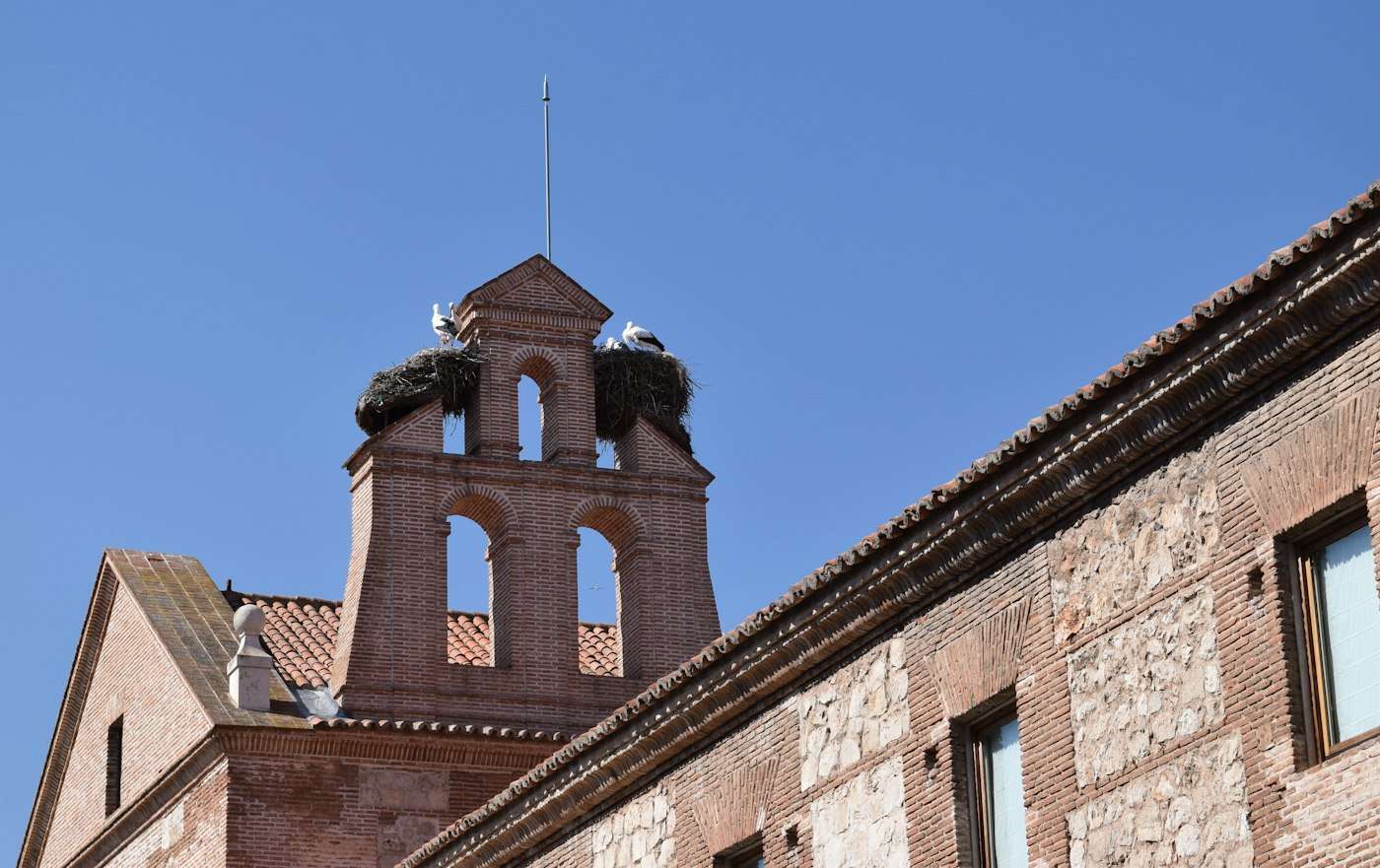
- Look up: white storks nest on nearly every tower and gable, a protected colony that has become the town’s second emblem. The clatter of beaks is Alcalá’s soundtrack.

Getting there
Cercanías suburban trains on the C-2 and C-7 lines leave Madrid’s Atocha and Chamartín stations several times an hour; Alcalá de Henares is about 40 minutes out, for a few euros each way — no reservations, just tap through. From the station, the old town starts ten minutes’ walk east, and everything — Calle Mayor, the university, the cathedral — sits within a flat, compact grid. A themed Cervantes Train with costumed actors runs on select dates for those who want the full production.
The day
Walk Calle Mayor first, under the longest run of arcades in Spain, to the Cervantes birthplace — free, furnished to the 16th century, and quietly moving for anyone who owes the man a debt. The Plaza de Cervantes anchors the town’s civic life; from there the university quarter opens, and the guided visit is the day’s centerpiece: the plateresque facade of San Ildefonso, the Paraninfo hall where the King hands over the Cervantes Prize every April, and the mudéjar chapel. Cisneros built Europe’s first planned university city here — UNESCO listed the whole ensemble in 1998 — and Golden Age Spain learned to read in these courtyards. Lunch on the tapas custom the town famously keeps: a proper free bite with each round. The cathedral, the archbishop’s palace quarter, and the Corral de Comedias — one of Europe’s oldest working theatres, from 1601 — fill the afternoon, storks clattering overhead throughout.
When to go
March through June and September through November for walking weather; the storks nest most visibly in late winter and spring. October brings the Cervantes Week festivities around the prize town’s patron date, and April the prize ceremony itself. High summer bakes the plain — go early and let lunch absorb the heat. Any season, midweek mornings give you the arcades nearly alone.
Frequently Asked Questions
How do you get to Alcalá de Henares from Madrid?
Cercanías C-2 or C-7 from Atocha or Chamartín, about 40 minutes, several trains an hour, a few euros each way. The old town is a ten-minute walk from the station.
Is the Cervantes birthplace museum really free?
Yes — free entry year-round, with period rooms recreating the surgeon’s household where Cervantes was born in 1547. Check the closing day and hours before you build the visit around it.
Why is Alcalá a UNESCO site?
As the world’s first planned university city: Cisneros’s 1499 foundation shaped a whole town around learning, exported the model to the Americas, and produced the Golden Age generation. The 1998 listing covers the university and the historic centre together.
What is the tapas custom?
Many Alcalá bars still serve a substantial free tapa with every drink ordered — a tradition Madrid proper has largely abandoned. Two or three rounds along Calle Mayor add up to lunch.
What is there to know about the storks?
A protected white-stork colony nests on Alcalá’s towers, visible on the university, the cathedral, and half the churches. They are residents, not tourists — many pairs stay year-round — and the bill-clattering from the rooftops is the town’s signature sound.