Ávila’s Walls
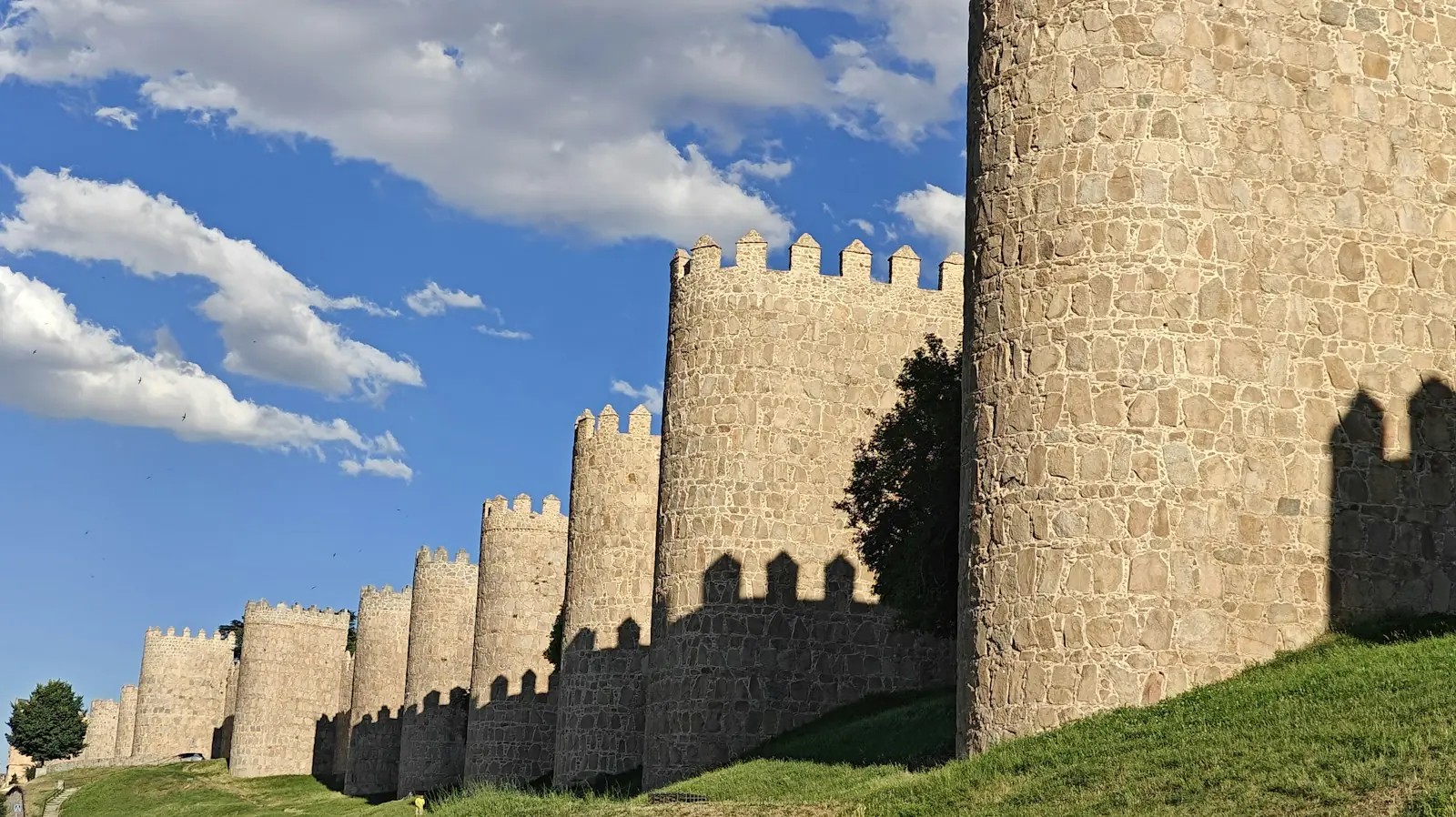
Ninety minutes northwest and a thousand meters up, Spain’s highest provincial capital wears the country’s best-preserved medieval walls — two and a half kilometers you can walk on top of — around the city of St Teresa.
The short version
- Trains run Madrid to Ávila in about an hour and a half at regional fares — renfe.com — with buses matching the time from Estación Sur for the schedule-flexible.
- The walls are Spain’s best-preserved medieval circuit: 2.5 kilometers, some 87 towers and nine gates, raised from the late 11th century on the Reconquista frontier — with two walkable wall-top sections ticketed at a few euros and the full exterior circuit free at street level.
- The Cuatro Postes — the four-columned shrine on the rise across the Adaja river — frames the alarm’s promised photograph: the entire walled city in one view, best at dusk when the illumination comes up.
- The cathedral is a fortress with a nave: its fortified apse is built directly into the wall circuit as a tower — Spain’s earliest Gothic by common dating — with the granite’s iron-mottled ‘bleeding’ stone as the interior’s signature.
- St Teresa is the city’s second identity: born here in 1515, the reformer-mystic’s convent of La Santa stands on her birthplace, with the Encarnación monastery (where she lived decades) and her relics drawing the devout and the curious on equal terms.
- The eating register per the alarm: yemas de Santa Teresa — the egg-yolk sweets — bought from convent shops or the old confiterías, and chuletón de Ávila (the region’s massive veal chop) as the carnivore’s set piece.

Getting there
Trains land a ten-minute walk from the walls; the altitude does the rest — 1,131 meters, per the alarm’s pack-a-layer clause, with mountain light and evening drops that surprise every season’s tourists. The wall-top sections open on posted hours (two access circuits, one ticket class), and the Cuatro Postes sits fifteen minutes’ walk outside the Puerta del Puente — the closing stop by design, timed against dusk when the schedule allows.
The day
Walls first per the alarm: the longer walkable stretch from the Casa de las Carnicerías runs the battlements past tower after tower — the meseta on one side, the packed old town on the other — and prices the whole trip at a few euros. Descend into the grid: the cathedral’s fortress-apse and bleeding granite, the Plaza del Mercado Chico’s arcades, and the Romanesque churches (San Vicente’s carved portal outstanding) that stud the circuit’s gates. The Teresa route threads it for those following her — La Santa’s chapel and museum, the Encarnación beyond the walls. Lunch runs chuletón-serious or tapas-light with judías del Barco (the local white beans) as the sleeper dish. The afternoon crosses the river for the Cuatro Postes photograph the alarm assigned, walks the free exterior circuit’s north face for the wall’s best textures, and closes with yemas from a convent counter per the standing instruction — the turno wheel at some doors is part of the transaction’s charm. Evening trains run you back down to Madrid’s weather.
When to go
May through October runs the walls in comfort — high summer included, since the altitude discounts Castile’s heat and the evenings, per the alarm, forget the season entirely. The autumn light on granite is the photographers’ pick. Winter is real at a thousand meters: cold, clear, occasionally white, and the walls at their starkest for the few who come. Teresa’s October feast dresses the city in its own celebration; summer weekends bring Madrid’s day-trippers, and the wall-top sections queue accordingly at midday.
Frequently Asked Questions
Are the walls original or restored?
Substantially original in circuit and mass — begun late 11th century — with restorations across the centuries keeping the walkways safe rather than reinventing them. What you walk is a working medieval enceinte, not a reconstruction, which is why the preservation claim leads every description honestly.
How much of the top can I actually walk?
Two ticketed sections covering a generous share of the circuit — the longer one delivers the classic battlement experience with multiple towers and gates. The full 2.5-kilometer exterior walks free at street level, and combining top and base gives the walls both scales in an afternoon.
Who was St Teresa, briefly?
A 16th-century Carmelite reformer and mystic — founder of the Discalced Carmelites, author of spiritual classics, and eventually the first woman named a Doctor of the Church. Ávila is her birthplace and stage; the sites present her with devotion and scholarship in adjustable doses.
What exactly are yemas?
Candied egg-yolk sweets — rich, dense, sugar-dusted spheres with convent origins and a saint’s name attached. The convent shops and old confiterías sell the genuine article per the alarm’s buy-from-the-source rule; a small box survives the train ride better than willpower survives the box.
Ávila or Segovia from Madrid?
Segovia (documented on this network) for aqueduct, fairy-tale alcázar, and roast suckling pig; Ávila for the walls’ single overwhelming statement and the quieter register. Same high-Castile direction, different headline monuments — the classic ambitious pairing does both in one long day, and this network’s standing arithmetic would rather you didn’t.